Industry 4.0 merges the physical and digital worlds through advanced technologies like AI and IoT, transforming industries with smart automation, data-driven decisions, and optimized supply chains.
01
The Era of the Industry 4.0: Revolution and Opportunities
The world is witnessing a change in the way industries operate, thanks to the rise of Industry 4.0. This new era, often referred to as the Fourth Industrial Revolution, is defined by the fusion of digital technologies and industrial processes. It’s a powerful evolution from the mechanization of the first industrial revolution to the mass production of the second, and later, the automation of the third. Today, Industry 4.0 is driving unprecedented innovation through digital transformation, fundamentally altering how businesses function and how industries produce goods and services.
But what exactly is Industry 4.0, and how does digital transformation fit into this emerging landscape?
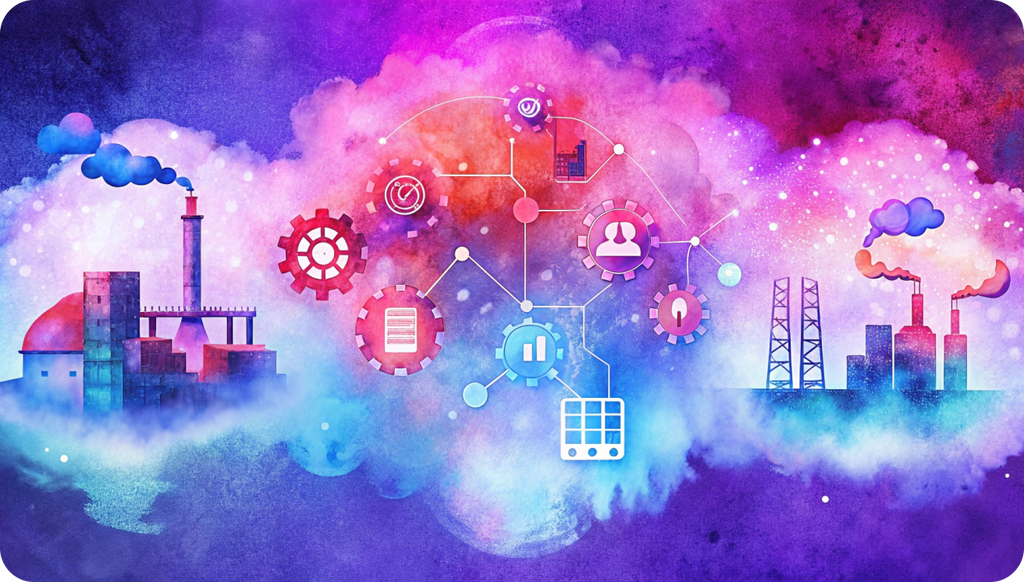
Industry 4.0 represents the convergence of the digital and physical worlds, where smart technologies like cloud computing, artificial intelligence (AI), Internet of Things (IoT), big data, and automation are integrated into industrial processes. This results in the creation of smart factories where machines, devices, and systems are interconnected and communicate in real-time, allowing for enhanced automation, real-time monitoring, and data-driven decision-making.
This revolution isn’t just about improving efficiency. It’s about transforming traditional business models, creating new opportunities for growth, and rethinking how value is created in industries from manufacturing and logistics to healthcare and agriculture.
02
The Impact of Digital Transformation in Industry 4.0
Digital transformation is the driving force behind Industry 4.0, enabling companies to leverage technology for greater innovation, agility, and efficiency. Here are some ways in which digital transformation is reshaping industries in the context of this revolution:
Automation and Smart Manufacturing
In Industry 4.0, automation goes beyond robotic assembly lines. With advanced AI and machine learning, factories can now adjust processes automatically based on real-time data. This enables predictive maintenance, reducing downtime, and improving overall efficiency. By automating routine tasks, companies can focus on innovation and strategic planning, boosting productivity and competitiveness.
Data-Driven Decision Making
One of the key pillars of Industry 4.0 is the ability to harness big data. Through IoT sensors and connected devices, industries collect vast amounts of data from machines, supply chains, and customer interactions. With the help of cloud computing and AI-powered analytics, businesses can make informed decisions in real-time, enhancing everything from production schedules to customer service.
Supply Chain Optimization
Industry 4.0 revolutionizes supply chain management. Real-time data, AI, and IoT allow for greater visibility across the supply chain, enabling businesses to optimize inventory, track shipments, and predict disruptions. This results in more agile supply chains that can quickly adapt to changes in demand or external factors such as weather or geopolitical events.
Personalized Products and Services
Digital transformation allows for greater customization and personalization in manufacturing. Through advanced technologies like 3D printing and IoT, companies can create products tailored to individual customer preferences, while optimizing costs and reducing waste. This ability to offer personalized solutions not only enhances customer satisfaction but also creates new revenue streams for businesses.
Sustainability
Industry 4.0 is also driving sustainability initiatives. With real-time data and automation, companies can optimize energy use, reduce waste, and make more environmentally conscious decisions. Cloud computing reduces the need for physical infrastructure, cutting down energy consumption. AI can be used to design more sustainable products and supply chains, while predictive analytics help companies make proactive decisions that minimize environmental impact.
03
Transformation for SMEs: Technology Democratization
For small and medium-sized businesses (SMBs), the adoption of digital transformation through Industry 4.0 is critical for survival and growth. In the past, cutting-edge technologies were accessible only to large enterprises with deep pockets. However, cloud computing and scalable solutions now allow even the smallest companies to tap into the benefits of Industry 4.0 without significant upfront investments.
SMBs can leverage cloud-based services to access AI tools, IoT platforms, and big data analytics without owning expensive hardware. This democratization of technology empowers smaller players to compete on a global scale, offering innovative products and services while reducing operational costs.
Moreover, adopting Industry 4.0 technologies allows SMBs to increase operational agility, adapt quickly to market changes, and optimize supply chains — all of which are essential in a competitive and ever-changing business environment.
04
Collaboration and Integration in the Cloud: The Future of AI
As Industry 4.0 continues to evolve, we can expect even greater levels of automation, connectivity, and intelligence across industries. The rapid pace of AI development, enhanced cloud solutions, and the growing potential of edge computing will accelerate this transformation, offering new possibilities for industries that have yet to fully embrace digitalization.
Looking ahead, 5G technology will further fuel this revolution by enabling faster and more reliable communication between devices and systems, making smart factories even more efficient. The increasing integration of AI and machine learning will also allow businesses to forecast trends, make smarter decisions, and create innovative business models.
In summary
The digital transformation in the context of Industry 4.0 is revolutionizing industries across the globe. By harnessing the power of cloud computing, AI, big data, and IoT, businesses can optimize operations, enhance productivity, and create more value for their customers. Whether it’s in manufacturing, healthcare, or retail, the impact of this transformation is undeniable, and its potential is boundless.
For businesses looking to remain competitive and thrive in the future, embracing Industry 4.0 isn’t just an option — it’s a necessity. The future belongs to those who can adapt and evolve in this new digital age.